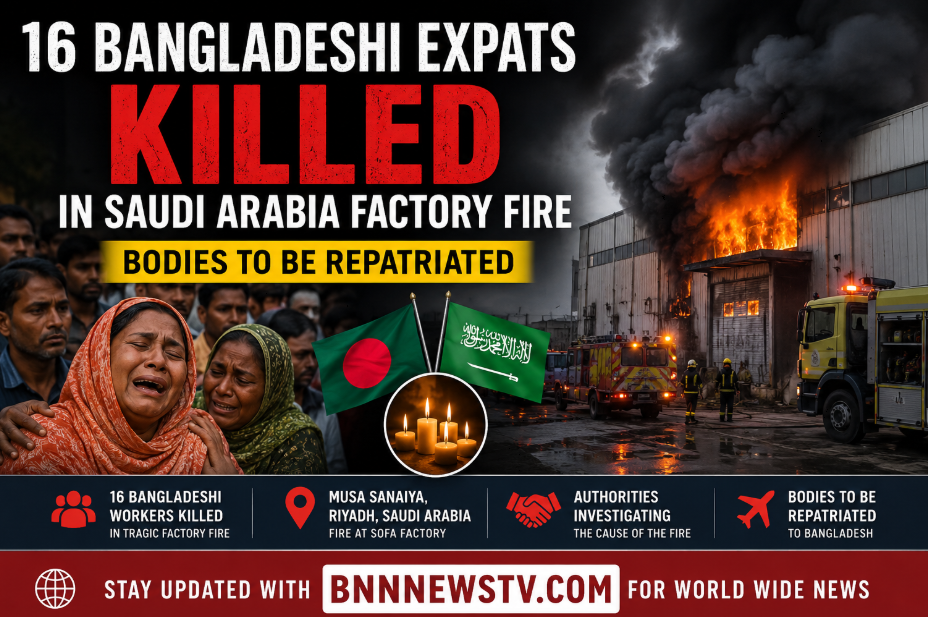
16 Bangladeshi Workers Killed in Saudi Arabia Factory Fire : A tragic factory fire in Saudi Arabia has claimed the lives of 16 Bangladeshi workers, leaving families in Bangladesh devastated. The fire reportedly broke out at a sofa manufacturing factory in the Musa Sanaiya area of Riyadh.
16 Bangladeshi Workers Killed in Saudi Arabia: Riyadh, Saudi Arabia: At least 16 Bangladeshi workers have died after a devastating fire broke out at a sofa factory in Riyadh, Saudi Arabia, in one of the latest tragedies involving migrant workers in the Gulf region.

The incident took place in the Musa Sanaiya area of Riyadh, according to Bangladesh’s Ministry of Foreign Affairs. The ministry confirmed the deaths and expressed deep sorrow over the loss of Bangladeshi nationals, extending condolences to the families of the victims.
The tragedy has once again drawn attention to the risks faced by migrant workers who travel abroad in search of employment and better economic opportunities for their families.
Fire Breaks Out at Sofa Factory in Riyadh
The fire reportedly broke out at a sofa manufacturing facility in the Musa Sanaiya industrial area of Riyadh. The area is known for workshops and small- and medium-sized industrial businesses.

According to the information released by Bangladesh’s Ministry of Foreign Affairs, 16 Bangladeshi nationals were among those who died in the blaze.
Emergency services responded to the incident, while authorities began efforts to determine the exact circumstances surrounding the fire.
At this stage, detailed information about the cause of the fire, the condition of the factory and the circumstances that prevented the workers from escaping remains limited.
Investigations by Saudi authorities are expected to establish how the fire started and whether any workplace safety violations contributed to the deaths.
Bangladesh Confirms Deaths
Bangladesh’s Ministry of Foreign Affairs confirmed the deaths on Monday and expressed profound grief over the incident.
The ministry offered condolences to the families and relatives of the workers who lost their lives. The confirmation is particularly significant for families in Bangladesh who may have been waiting for information about their loved ones working thousands of kilometres away.
For many Bangladeshi families, overseas employment is an important source of income. Workers in Saudi Arabia and other Gulf countries often send part of their earnings home to support parents, spouses, children and other relatives.
The loss of 16 workers in a single workplace incident therefore represents not only a human tragedy but also a major emotional and financial shock for their families.
Bodies Expected to Be Repatriated to Bangladesh
The bodies of the deceased Bangladeshi workers are expected to be repatriated to Bangladesh after the necessary identification, legal and administrative procedures are completed.
The repatriation process generally involves coordination between Saudi authorities, Bangladesh’s diplomatic representatives and the relevant local authorities. Identification of victims is an important part of the process, particularly when a fire causes severe damage to the bodies.
Once the formal procedures are completed, the remains can be transported to Bangladesh, where families can arrange funerals and burial according to their wishes and traditions.
For relatives waiting in Bangladesh, bringing the bodies home is likely to be one of the most urgent priorities following the tragedy.
A Tragedy for Migrant Worker Families
The incident has highlighted the vulnerability of migrant workers, particularly those employed in factories, workshops and other industrial workplaces.
Migrant workers frequently live and work far away from their families. When a major accident occurs, families can face difficulties obtaining immediate information about their relatives.
The emotional impact can be particularly severe when communication is disrupted and authorities need time to identify victims.
Bangladesh is one of the world’s major labour-exporting countries, with millions of its citizens working overseas. Saudi Arabia remains one of the most important destinations for Bangladeshi migrant workers.
These workers contribute significantly to their families and to Bangladesh’s economy through overseas earnings and remittances.
Workplace Safety Under Focus
The Riyadh factory fire is also likely to raise questions about workplace safety and emergency preparedness.
Factories and workshops that handle furniture, foam, fabrics, wood and other combustible materials can face serious fire risks if adequate safety measures are not in place.
Important workplace safety measures include clearly marked emergency exits, functioning fire alarms, fire extinguishers, emergency lighting, evacuation plans and regular safety training for workers.
Authorities may examine whether the factory met Saudi Arabia’s workplace and fire-safety regulations and whether workers had sufficient access to safe escape routes.
However, until an official investigation is completed, it would be premature to draw conclusions about the cause of the incident or assign responsibility.
Saudi Arabia’s Role in Protecting Migrant Workers
Saudi Arabia is home to a large expatriate workforce from countries across Asia and other parts of the world. Migrant workers play an important role in sectors including construction, manufacturing, hospitality, services and domestic work.
The deaths in Riyadh underline the importance of maintaining strong safety standards across workplaces where large numbers of foreign workers are employed.
Effective fire-prevention systems, regular inspections and rapid emergency response can help reduce the risk of fatalities when accidents occur.
For migrant workers, safety information should also be provided in languages they can easily understand. Clear instructions about emergency exits, evacuation procedures and reporting unsafe conditions can be particularly important for workers who may not speak the local language fluently.
Families Await More Information
As authorities continue their procedures following the fire, families in Bangladesh are expected to await further details about the victims and the repatriation arrangements.
For the families, the workers were not simply names in an official death toll. They were fathers, sons, brothers, husbands and relatives who had travelled overseas to earn a living.
Many migrant workers leave their homes with the hope of improving their family’s financial situation. A workplace tragedy thousands of kilometres away can therefore have consequences that extend far beyond the site of the accident.
The repatriation of the bodies will allow families to bring their loved ones home and provide them with a final farewell.
What Happens Next?
The immediate priorities following the Riyadh factory fire are expected to include:
- Official identification of all victims
- Completion of necessary legal procedures
- Investigation into the cause of the fire
- Coordination between Saudi authorities and Bangladeshi diplomatic officials
- Communication with the victims’ families
- Repatriation of the bodies to Bangladesh
- Assessment of workplace safety conditions at the factory
Authorities may also investigate whether other workers were present at the facility and whether anyone was injured or rescued during the incident.
More information is expected to emerge as the investigation progresses.
A Reminder of the Human Cost of Overseas Employment
The deaths of 16 Bangladeshi workers in Riyadh are a painful reminder of the risks faced by migrant workers around the world.
For countries such as Bangladesh, overseas employment provides vital economic opportunities and supports millions of families. But ensuring that workers can earn a living safely must remain a priority for employers and authorities.
The tragedy also reinforces the importance of strong workplace safety regulations, effective emergency systems and timely support for migrant workers and their families.
As Bangladesh prepares to receive the remains of the workers, attention will now turn toward the investigation into the fire, the identification and repatriation process, and efforts to ensure that similar tragedies can be prevented in the future.
The incident remains under investigation, and further details may emerge as Saudi and Bangladeshi authorities provide additional information.